Notion
🌐 Website Preview
notion.so
Details
Pros
- Free tier available
- API available
- GDPR compliant
Cons
- No EU server location
Profile: Notion
| Company | Notion |
| Type | Automation & No-Code |
| Founded | 2013 |
| Headquarters | San Francisco, USA |
| Server Location | US |
| GDPR Status | ✅ Compliant |
| Free Tier | Yes |
| Starting Price | $10/mo |
| Pricing Model | SUBSCRIPTION |
| Website | notion.so |
About Notion
Notion has become the defining productivity tool of the 2020s, offering an all-in-one workspace that combines documents, databases, wikis, project management, and AI assistance. Founded in 2013 and now valued at $10 billion, it's used by teams from startups to enterprises including Toyota, Spotify, and Figma.
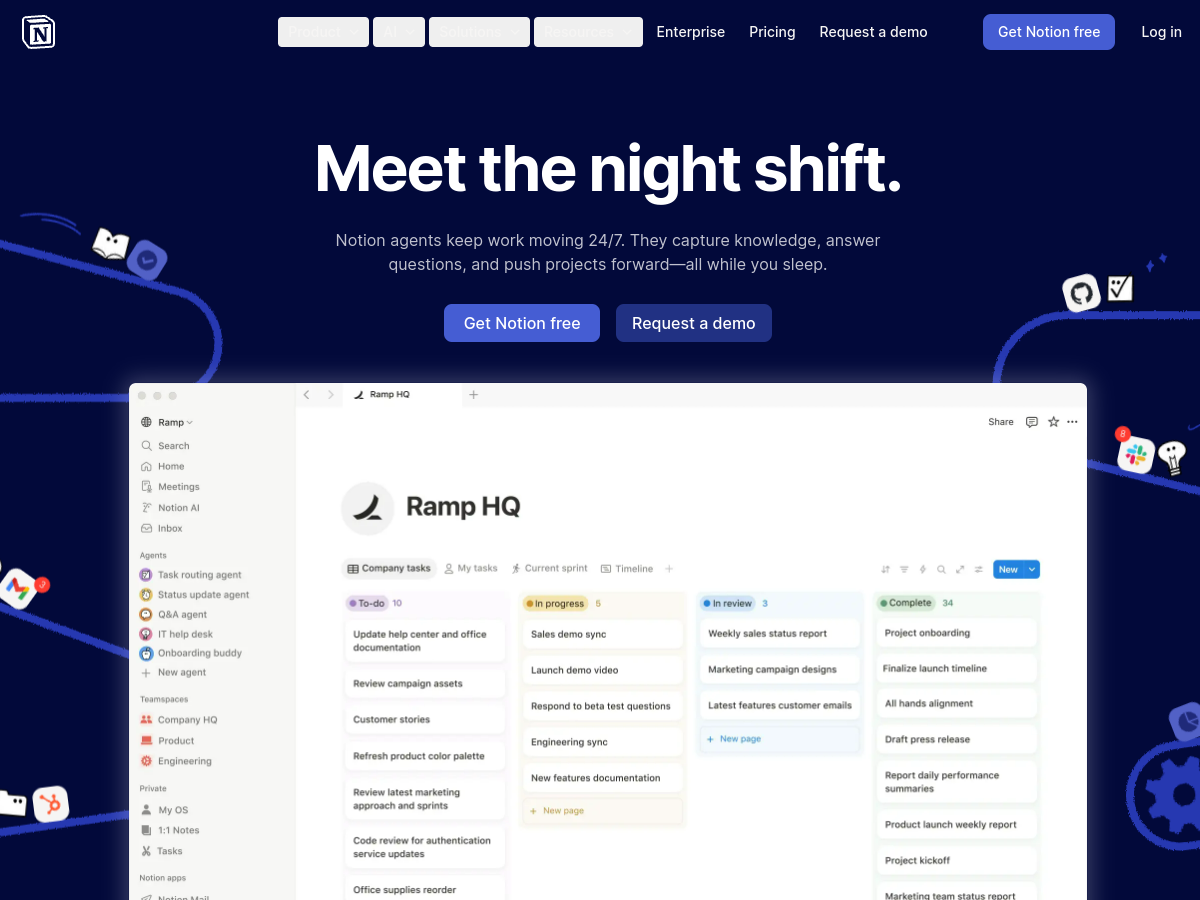
The platform's block-based architecture means everything is modular — text, images, databases, embeds, toggles, callouts, and code blocks can be mixed freely on any page. Databases support multiple views (table, board, timeline, calendar, gallery, list) and can be linked together with relations and rollups.
The free plan offers unlimited blocks for individual users with 7-day page history. Plus ($10/seat/mo) adds 30-day history and guest collaborators. Business ($15/seat/mo) includes SAML SSO and private team spaces. Notion AI is an optional add-on at $8/seat/mo, providing AI-powered Q&A across your workspace, writing assistance, autofill for databases, and automatic summaries.
Notion's strengths as a no-code tool come through its databases (which function like lightweight Airtable alternatives), its API (for building integrations), and its template ecosystem (thousands of pre-built workflows). Automations allow triggering actions when database properties change. Limitations include performance issues with very large workspaces, limited offline support, and the fact that it's a productivity tool first — not a true automation platform like Zapier or Make.