
Murf AI
🌐 Website Preview
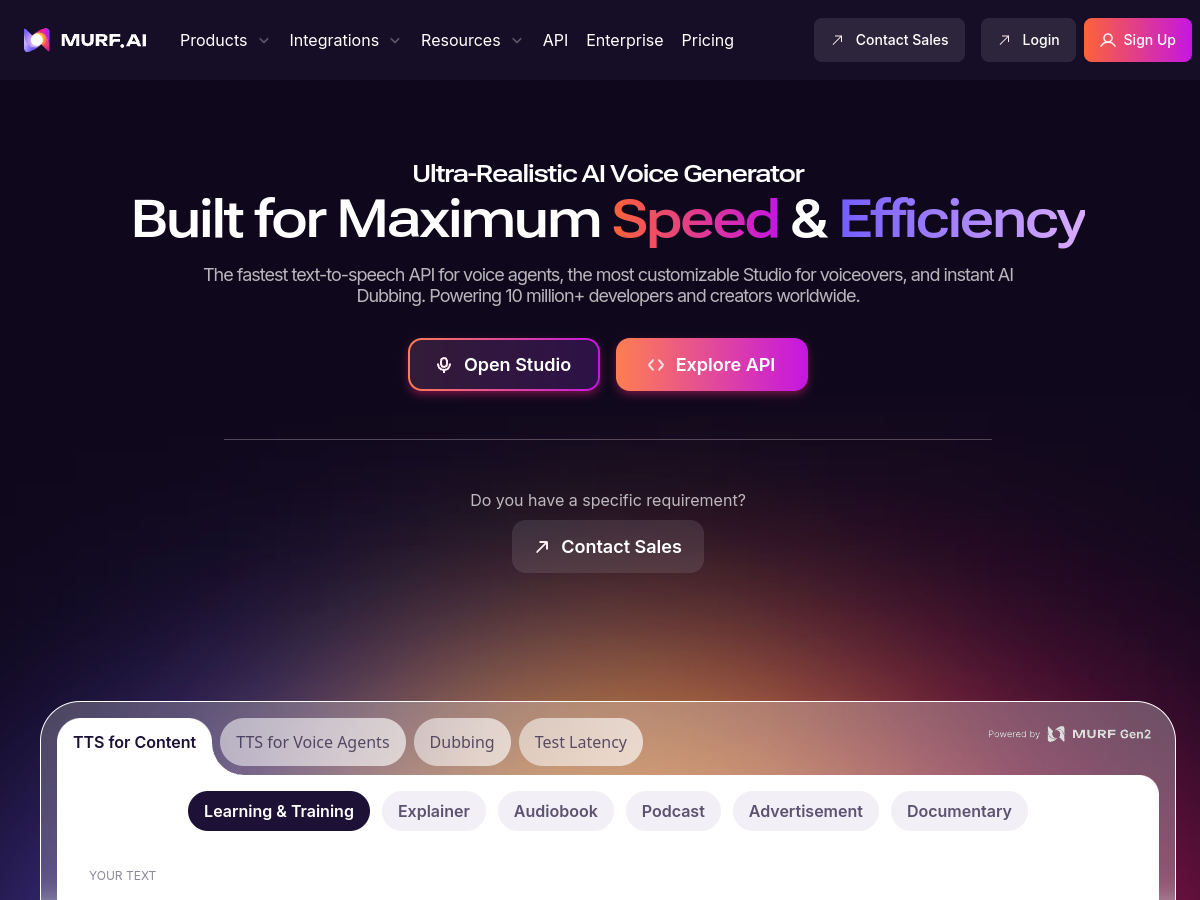
murf.ai
Details
Pros
- Free tier available
- API available
- Commercial license included
Cons
- No GDPR compliance confirmed
- No EU server location
Profile: Murf AI
| Company | Murf AI |
| Type | Voice & Speech |
| Founded | 2020 |
| Headquarters | San Francisco, USA |
| Server Location | US |
| GDPR Status | ⚠️ Not confirmed |
| Free Tier | Yes |
| Starting Price | $19/mo |
| Pricing Model | SUBSCRIPTION |
| Website | murf.ai |
About Murf AI
Murf AI positions itself as a complete AI voice studio — not just a text-to-speech engine, but an integrated production environment where voiceovers are synchronized with video, presentations, and e-learning modules. Founded in 2020, Murf has gained particular traction with corporate training departments, marketing teams, and instructional designers.
The platform's Speech Gen 2 engine (launched mid-2024) represents a significant quality leap, producing voiceovers with natural cadence and emotional range. Murf offers 200+ voices across 20+ languages, with customizable speed, pitch, emphasis, and emotional tone. The "Say It My Way" feature allows users to record their own phrasing to guide the AI's intonation.
Murf's distinguishing feature is its built-in video and presentation editor. Users can drag-and-drop media, sync voiceover timing with visual elements, add background music, and export complete production-ready videos — eliminating the need for separate editing software. Integration with Canva further streamlines the workflow for marketing teams.
Pricing follows a time-based model: the free tier offers 10 minutes of generation (no downloads), Creator at $23/month includes 2 hours/year of downloadable audio, Business at $66/month provides 4 hours/year, and Enterprise at $166/month includes 8 hours/year with professional voice cloning and priority support.
Voice cloning on Murf is available only as a premium enterprise feature, requiring consent verification — a deliberate ethical choice. The platform lacks real-time streaming capabilities and a standalone developer API at lower tiers, which limits its appeal for conversational AI applications.